There is a man at my gym who has asked me where I get my protein, by my count, thirty-one times. Thirty-one. Same man. Same question. Same look of theatrical concern, like he is rehearsing for my early funeral. I have explained chickpeas to him. I have explained tofu. I have explained the math. He nods. He squats four hundred pounds. Two weeks later he is back at it. “But seriously bro, where do you get your protein.”
I have given up trying to convert him. I write this article instead.
If you are vegan or thinking about it, you already know this question. It comes from coworkers, your father, your aunt who has not asked about anything else in your life in twenty years but suddenly cares deeply about your amino acid intake. It is the universal question. And the funny thing is, after three years of being plant based, I have come to understand that it is also the easiest question in nutrition.
Building a list of solid vegan protein sources is genuinely simple. The problem is not availability. Half the cheapest foods in any grocery store are loaded with vegan protein sources. The problem is that nobody hands you a list and explains how the math actually works. So I am going to do that here.
How Much Protein Do You Actually Need
Let me get the boring part out of the way first because the supplement industry has done such a thorough job of confusing this.
The average adult, sitting at a desk all day, needs about 0.8 grams of protein per kilogram of body weight per day. If you weigh 70 kilos, that is 56 grams. If you weigh 90 kilos, that is 72 grams. Done. Not 200 grams. Not 150 grams. Not whatever the gym-bro on YouTube told you while flexing in his car.
If you lift weights or run regularly, push it up to 1.2 or 1.4 grams per kilo. If you are an actual athlete training six days a week, go to 1.6. The ceiling is around 2 grams per kilo and you only need that if you are competing in something. I run three times a week and lift twice. I weigh 153 pounds (down from 165 when I started). My target is around 85 grams. I hit it most days without thinking about it. Some days I undershoot. The world does not end.
The point of saying all this is to deflate the protein panic. The number you actually need is achievable. The supplement industry wants you to think otherwise because they are selling you whey powder. Plants will get you there if you actually pay attention.
The Twenty Vegan Protein Sources That Do The Most Work
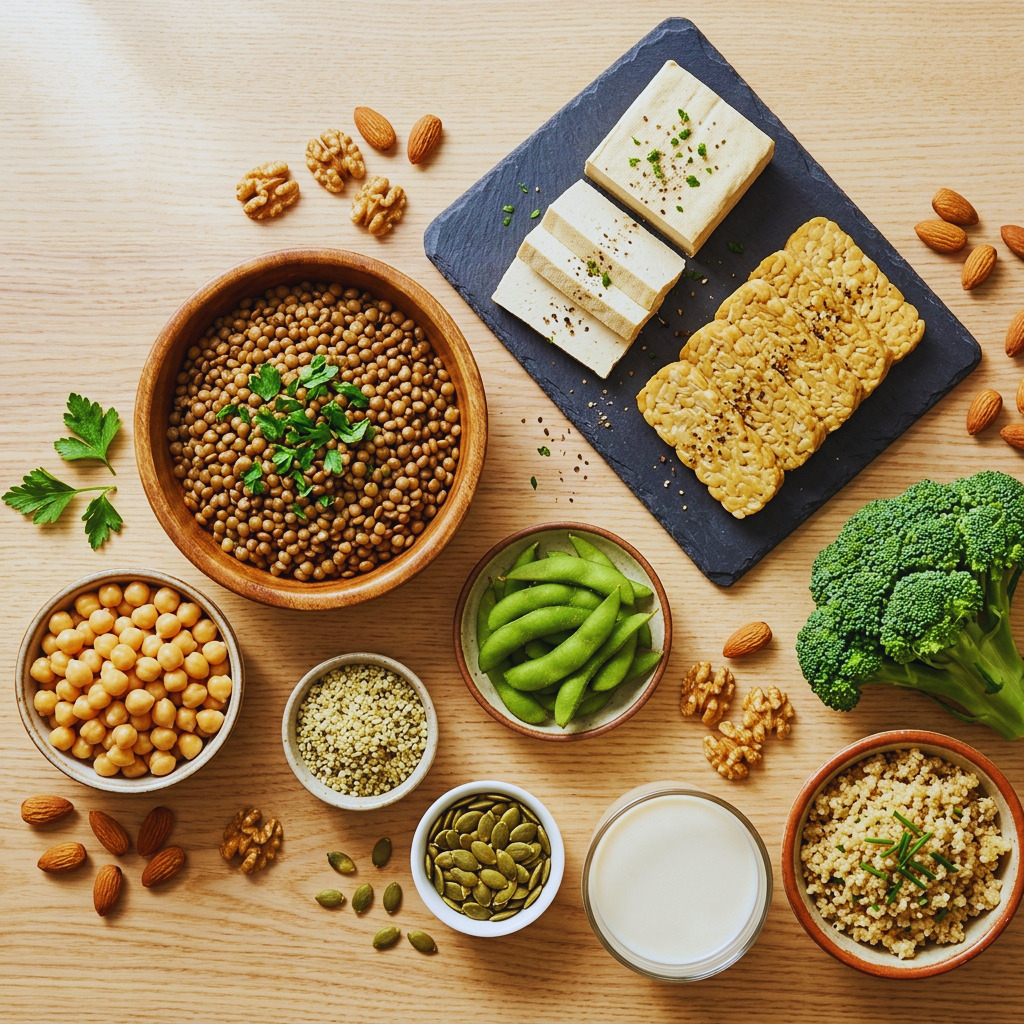
Here are the vegan protein sources I actually keep in my kitchen. Not the ones a nutrition website would tell you to keep. The ones that survived three years of trying things and discarding what did not work.
Legumes, the workhorses
Lentils. Eighteen grams of protein per cup cooked. Sixteen grams of fiber. They cost about two dollars a pound dry. If you stock one thing on this entire list, make it lentils. Green ones hold their shape for salads. Red ones cook in fifteen minutes and turn into the world’s easiest soup. The little black ones (called beluga because they look like fish eggs) make any bowl look like a chef plated it. My mother makes a lentil tagine that has converted at least four of her friends back home in Casablanca. Lentils are not optional in this house.
Chickpeas. Fifteen grams per cup. I keep them in canned form because the dry ones require thinking ahead and I am not always organized enough. Hummus, roasted, in pasta, smashed on toast, in stews. They go with everything. The aquafaba (the liquid from the can) whips into meringue if you are weird enough to try it. I have done this exactly once.
Black beans. Fifteen grams per cup. Slightly sweeter than other beans. Make black bean brownies once and try not to act like a crazy person when they actually taste good.
Edamame. Seventeen grams per cup. Frozen, salted, ready in five minutes. The single laziest high-protein snack in this list. There is no excuse not to keep a bag.
Kidney, pinto, white beans. All in the 13-15 gram range. Stock at least two of these. They handle chili, soups, anything Italian.
Soy, the heavy hitters
Tempeh. Thirty-one grams of protein per cup. Yes really. More than chicken on a gram-for-gram basis. The catch is that you have to learn how to cook it. I gagged on tempeh for the first six months. Now I crave it. Pan fry it crispy with soy sauce, garlic, and a little maple syrup. You will understand.
Tofu (firm). Twenty grams per cup. The trick most people miss is pressing it. Wrap the block in a clean towel, put a heavy plate on top, wait ten minutes. Now it will actually crisp up when you fry it. Without pressing, you get sad rubbery tofu and you wonder why people like this stuff.
Soy milk. Eight grams per cup. The only plant milk with real protein. Oat has three. Almond has one. If you put plant milk in coffee or oatmeal, default to soy and you stack protein every morning without thinking.
Seitan. Twenty-five grams per 100 grams. Made from wheat gluten. Mimics chicken texture so well that people get suspicious. Not gluten free obviously. If you tolerate wheat, this is one of the most protein-dense foods on Earth.
Grains that quietly help
Quinoa. Eight grams per cooked cup. Complete protein. Mild flavor. Use it as a base for bowls or salads. Cook a big batch on Sunday.
Oats. Six grams per half cup dry. Overnight oats with chia, hemp seeds, and a tablespoon of nut butter becomes a fifteen to twenty gram protein breakfast that takes zero effort in the morning.
Whole wheat pasta. Eight grams per two ounces dry. Pair with a lentil “bolognese” (just cooked lentils with marinara) and dinner is twenty-five grams of protein in fifteen minutes.
Nuts and seeds that pull their weight
Hemp seeds. Ten grams of protein per three tablespoons. Sprinkle on everything. Salads, smoothies, oatmeal, soups, toast with avocado. They are nutty, soft, and disappear into whatever you put them on.
Pumpkin seeds. Nine grams per quarter cup. Loaded with zinc, which is one of the trickier minerals to nail on a plant based diet.
Almonds. Six grams per quarter cup. Raw almonds as a snack. Almond butter on whole grain toast. Almond flour in baking.
Peanut butter. Eight grams per two tablespoons. Cheap, kid friendly, calorie dense. Read the label. The only ingredients should be peanuts and salt. Anything else is candy in disguise.
Chia seeds. Five grams per two tablespoons. Soak overnight in plant milk and you have chia pudding. I will not lie, the texture takes some getting used to. Some people never get over it. I gave up trying to convince my wife.
Cashews. Five grams per quarter cup. Soaked and blended, they become cream sauces, vegan cheese, salad dressings. The most useful nut in plant based cooking.
Vegetables that quietly add up
Broccoli. Four grams per cooked cup. Easy to dismiss until you actually plate up a big serving and realize you got six or seven grams of protein from a vegetable.
Spinach and leafy greens. Five grams per cooked cup. Wilts down to nothing so it disappears into anything. Pasta. Soup. Stir fry. Quiet protein.
The framework that ties this all together
The Vegan Reset takes vegan protein sources and the rest of the Big 8 essential nutrients and turns them into a step-by-step plan. The Plant-Based Plate Method, sample recipes, a 7-day starter meal plan, shopping lists, and a daily checklist that makes hitting your protein target effortless.
59 pages · Instant PDF · $7.99 (was $22.99)
The Incomplete Protein Myth That Will Not Die
You will hear from somebody, probably at a dinner party, that vegan protein sources are “incomplete.” That you need to combine specific foods at every meal or your amino acids will not work. This is nutrition science from 1971. It has been disproven for decades. Nobody told the dinner party people.
Two things to know.
First, every plant food contains all nine essential amino acids. Some have more of certain ones, less of others. But all nine are present. The “incomplete” framing is a quirk of how researchers in the 70s talked about amino acid profiles relative to meat, not an actual nutritional deficiency.
Second, your body pools amino acids over hours and days. You do not need to combine proteins at every meal. You need to eat varied plant foods across the day. Beans for lunch, rice for dinner, lentils tomorrow, that gets you everything.
That said, certain combinations boost amino acid quality and have stood the test of time culturally for good reason. Beans and rice. Hummus and pita. Peanut butter and whole grain bread. Lentil soup and crusty bread. Every culture invented these on their own. The Academy of Nutrition and Dietetics has confirmed these patterns work fine for any life stage.
What 70-100 Grams Of Protein Actually Looks Like
Here is the protein math, spelled out so you stop having to think about it.
The easy 70 gram day
- Breakfast: overnight oats with hemp seeds, chia, and a spoon of peanut butter. about 18 grams
- Lunch: lentil power salad with quinoa and pumpkin seeds. about 25 grams
- Snack: handful of edamame, salted. about 8 grams
- Dinner: tofu stir fry over brown rice. about 22 grams
- Total: ~73 grams without trying
The 100+ gram day for athletes and lifters
- Breakfast: tofu scramble with whole grain toast and avocado. about 28 grams
- Snack: soy milk smoothie with hemp seeds and peanut butter. about 20 grams
- Lunch: tempeh Buddha bowl with chickpeas and tahini. about 35 grams
- Dinner: lentil bolognese over whole wheat pasta. about 30 grams
- Total: ~113 grams
If you want a structured meal planning approach, see our 7-day vegan meal plan for beginners.
Five Mistakes That Will Wreck Your Protein Math
I made all of these. So did most of the seven friends who tried plant based eating with me. Save yourself the trouble. Especially if you are still figuring out which vegan protein sources actually work for your life.
Mistake one. Living on salads
A leafy salad with no lentils, chickpeas, tempeh, or tofu has maybe five grams of protein. That is half a snack, not a meal. New vegans live on salads, feel hungry constantly, and conclude that veganism does not work. Add a protein source to every salad. Every single one.
Mistake two. Eating processed vegan junk
Beyond burgers have protein, sure. They also have ingredients lists that read like a chemistry textbook. Vegan chicken nuggets, vegan cheese, vegan ice cream. Technically vegan, nutritionally junk. Use them occasionally if you want, but build the foundation on whole vegan protein sources.
Mistake three. Avoiding soy
You will hear that soy is dangerous, causes cancer, gives men breasts. This is internet nonsense that has been thoroughly debunked. Moderate soy consumption is one of the healthiest things you can do. And it happens to be the highest-protein plant category on Earth. Stop avoiding tempeh because of rumors that have not aged well.
Mistake four. Eating the same things forever
I went through a phase where I ate lentils for ten days straight. By day eleven I was furious at lentils. Variety matters. Rotate legumes, soy, grains, nuts, seeds. Your amino acid coverage gets better and you do not start hating food.
Mistake five. Undereating without realizing it
Plants are less calorie dense than meat. To hit your protein target you need to eat more total volume than you would on a meat diet. New vegans often undereat by accident, feel weak, blame the diet. The diet is fine. Eat bigger portions, especially in the first month while your body recalibrates.
Protein For Specific Goals
For weight loss
Lean into the protein-dense, fiber-rich, low-calorie options. Lentils, edamame, tofu, hemp seeds. These keep you full for hours without piling on calories. Skip the processed alternatives entirely until you have nailed the basics.
For muscle building
Add tempeh, seitan, soy milk, and consider a pea or soy protein powder post workout. Aim for 1.6 to 2 grams per kilo body weight. Eat more calories than you burn. The math is the same as omnivore muscle building, just with different foods.
For budget eating
Dry lentils, dry beans, oats, peanut butter, frozen edamame. The cheapest aisles of any grocery store are also some of the most protein-dense vegan options. A pound of dry lentils is around two dollars and feeds you for days.
For convenience
Canned beans, pre-cooked lentil pouches, baked tofu, hummus, plant milks, hemp seeds. Ready in seconds. No prep beyond opening a package.
The Questions I Get Every Week
Can you really build muscle on plants
Yes. Demonstrably. Bodybuilders, NFL players, ultra-marathoners, Olympic athletes have done it. Hit your protein target, eat enough total calories, the rest is the same as anyone else. Tempeh, seitan, tofu, soy milk make it straightforward.
Which vegan protein source is closest to chicken
Tempeh wins on raw numbers (31g per cup). Seitan wins on texture (genuinely meat-like when seasoned correctly). Soy curls if you want shredded chicken texture for tacos and stir fries.
Do I need a vegan protein powder
Probably not. If you eat varied whole foods, you cover your protein with normal meals. If you train hard or struggle to eat enough food, a pea or soy isolate post workout helps. Skip the fancy proprietary blends. Buy plain powder.
What if I am allergic to soy
Plenty of options. Lentils, chickpeas, all beans, quinoa, hemp seeds, pumpkin seeds, nuts, seitan, pea protein. Soy is convenient but not required.
Can kids get enough protein on a vegan diet
Yes, with proper planning. The Academy of Nutrition and Dietetics confirms well-planned vegan diets are nutritionally adequate for all life stages including childhood. Consult a pediatric dietitian for personalized targets.
What about complete proteins
Mentioned above. Modern science says you do not need to combine at every meal. Eat varied plants across the day. Your body handles the rest.
Ready to make this effortless
The Vegan Reset takes the protein math and the rest of the Big 8 essential nutrients and turns them into a 59-page playbook. The Plant-Based Plate Method, sample recipes you will actually make, a 7-day starter meal plan, shopping lists, and a daily checklist. English and German. 30-day money-back guarantee.
Only $7.99 · Instant PDF · 30-day money-back guarantee
Not ready to buy? Grab the first 16 pages free. Chapter 2 has the deep dive on protein and the rest of the Big 8.
Want more on the broader picture? Check our guides on the actual health benefits of a plant-based diet or how to start a vegan diet step by step.
The protein question is the easiest question in plant based eating. Stock the foods above. Mix them across your week. Eat enough total food. The gym bro can keep asking. You can keep ignoring him.